Sunlight-readable LCD displays and optical enhancement
Sunlight readability depends on contrast in the intended environment. FPD.DEV combines optical bonding, front-surface anti-reflective (AR) coatings, backlight enhancement and integration choices to improve the complete display assembly.
Where we can help
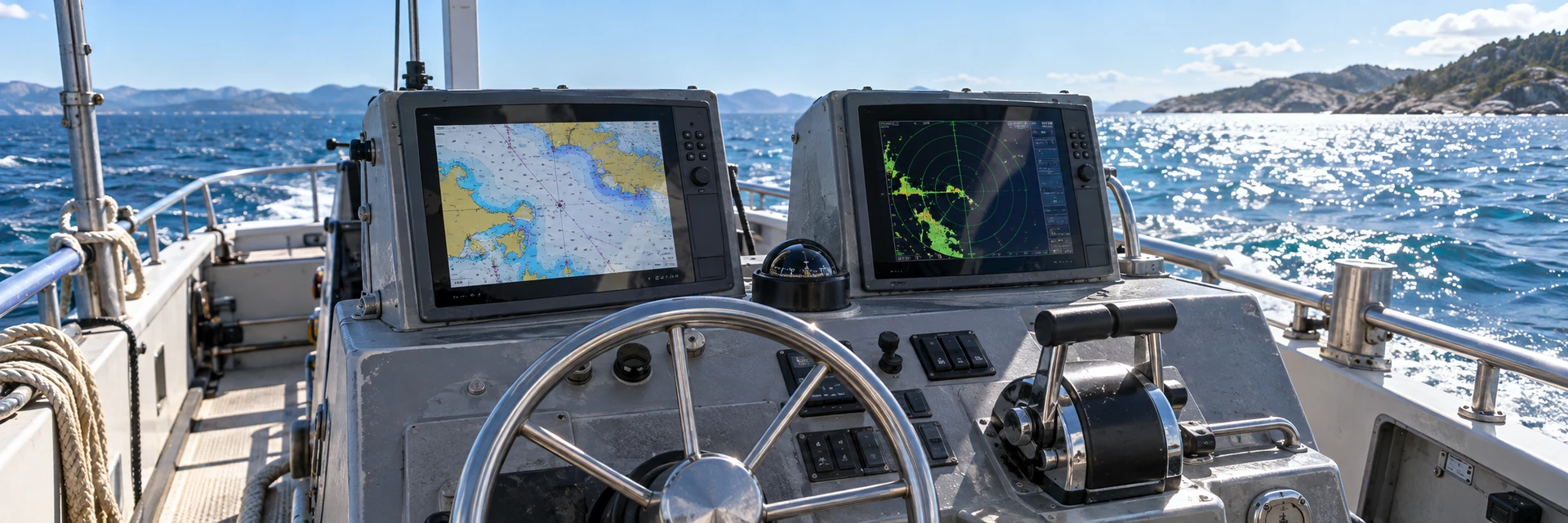
Outdoor equipment, marine displays, vehicle interfaces, and industrial systems can face very different viewing conditions. We start with the intended environment and the information the user must see, then help define practical optical targets and an evaluation approach for the complete assembly.
- Review ambient lighting, viewing geometry, display characteristics, and readability goals.
- Evaluate optical bonding to cover glass or another suitable substrate, front-surface AR coatings, touch panels and the complete optical stack.
- Review backlight enhancement, brightness control, and day/night operation requirements.
- Identify integration constraints and define comparison or evaluation conditions.
Typical project outputs
An agreed project may produce an optical requirements summary, comparison of enhancement options, proposed stack changes, or a measurement and evaluation plan. Any performance target is tied to the selected assembly and defined test conditions.
What to include in your inquiry
- Display model, active area, optical stack, and available brightness or reflection data.
- Expected lighting, viewing distance and angles, and day/night operating needs.
- Touch requirements, power and thermal limits, enclosure constraints, and applicable DO-160 sections/categories for airborne equipment.
- Photos or examples of the current readability issue and the intended use.
Reduce reflections before adding brightness.
Optical bonding is a key part of sunlight readability. Bonding a suitable substrate to the display reduces reflections at the internal air-gap interfaces; an anti-reflective (AR) coating on the front surface reduces the reflection that remains at the outer face.
In a reflection-limited assembly, combining optical bonding with front-surface AR treatment can improve sunlight readability substantially more than doubling backlight brightness alone. The result depends on the original optical stack, ambient light and viewing geometry.
We assess reflected light and ambient contrast alongside brightness, dimming, power and thermal limits, then select the optical and backlight changes together. Explore optical bonding design and process development.
Technical background: Planar on optical bonding and anti-reflective surface treatments.
What can reflection reduction change?
In our illustrative calculation, the same 500 cd/m² LCD improves from 6.0:1 to 48.6:1 ambient contrast when assumed reflected luminance falls from 100 to 10 cd/m². Doubling its backlight instead gives 10.9:1. These are model results, not measured product claims.
Readability that fits the environmental requirements.
Our expertise includes solving difficult display requirements when standard approaches fall short. We consider the optical stack, backlight, thermal design, electronics and housing together.
For airborne equipment, establish the applicable RTCA DO-160 issue, sections and categories and the qualification evidence required for the completed assembly. Sunlight-viewability claims also need defined optical conditions and performance criteria: DO-160 environmental qualification alone does not establish sunlight readability.
Plan DO-160 qualification alongside optical and NVIS requirements →
Related tools and products
Use these resources to prepare your requirements. Product suitability and evaluation results should be confirmed for the selected configuration and application.
Discuss your project
Tell us what you are developing or trying to resolve. We can help define the scope, required inputs, and next step. Pricing is provided by quotation.